Wednesday, September 19, 2007
Master and Disciple - the Far Side of the Law
It is nothing short of irony that the follower of the NKF shenanigans, Mr Richard Yong, should end up serving a sentence 5 times the length of his boss'. Mr TT Durai had been sentenced to 3 months jail time earlier. But of course, the reason for that extra long sentence is because Mr Yong did more shenaniganing AFTER the NKF affair than before it, all of which raises doubts about the character of the man.
In particular is his attempt to spin a wholely unbelievable story about how he had to chase his wife from Singapore to Johore and all the way to Hong Kong to get back his money which he said his wife had stolen from him and planned to leave him with. Well, he should have left things be because he will now lose those money anyway and he has caused his wife to be charged with money laundering, for which she is in custody in Hong Kong. One wonders if his lawyer did not help him craft this incredible story. A lawyer is supposed to help the court clarify points of the law in favour of his client's case, not pull wool over the eyes of everyone, including the judge, by helping to spin fairy tales. But then, I am indulging in some speculation myself.
Thus of the two, it would appear that Mr TT Durai is a more responsible and honourable man. At least now he is out of the country legitimately working to pay off his debts rather than trying to liquidate everything and running away with the 'booty'.
Truly the love of money has undone Mr Richard Yong and his wife. Let us hope that both of them will find the light during the time that they is incarcerated.
Tuesday, September 18, 2007
Shifting Track
Well, you must give the government credit. In spite of PM Lee Hsien Loong's very public pronouncement that all Singaporeans under 50 years of age MUST buy an annuity to tide over the rest of their life's needs, the government has backed down. In Parliament yesterday, the Manpower Minister, Mr Ng Eng Hen, said something to the effect that this annuity thing may not be compulsory after all. Yes, people have different needs and different people have different means. You just can't treat everyone the same and say everyone MUST buy into the annuity plan structured by the government. Yes, the government wanted to achieve mass participation so that the cost of the annuity will be low enough to be affordable, yet the yields are high enough to satisfy. But I suppose the people in charge of aging issues were not listening to their colleagues over at the Education Ministry.
The people in charge of education have been saying for some time now that people have different abilities and interests, that we shouldn't treat everyone with a cookie-cutter. Some are more artistic, others are more analytical. Some learn slower, others faster. Some are better with their hands, others are good with their minds. So education has taken a much more diverse offering in recognition of these differences. This, if nothing else, is an enlightened piece of thinking.
Yet, the people at the government's old folks department insist on using the cookie-cutter which the education people have very wisely discarded. What happened to the careful deliberation process, which the Singapore government is well known for, on this issue? It seems that someone or some people just pushed out a half-baked cake for the PM to sell at a very public occasion, which caused a lot of indigestion. Is the nation beginning to be short-changed by some very costly scholars in the civil service who cannot figure out what the man in the street takes a second to do so - that a compulsory annuity takes away PEOPLE's OWN hard earned money without the certainty that they will benefit from it at all. Well, yes, you may say that Singaporean's give generously to charity, but that's all voluntary.
The proposed forced annuity is but another form of deferred taxation, is it not? And worst, it is regressive in nature, like the GST. Poorer people pay proportionately more than do the well off. The premiums paid are effectively redistributed in favour of those who live longer - possibly the more well off because they can better afford life-sustaining medical care.
A committee will now be formed to consider the matter in greater depth. Its seems that the original people/committee that were/was considering this matter in depth (in the PM's department, no less) didn't do that thorough a job. Let's hope the new committee does better.
The people in charge of education have been saying for some time now that people have different abilities and interests, that we shouldn't treat everyone with a cookie-cutter. Some are more artistic, others are more analytical. Some learn slower, others faster. Some are better with their hands, others are good with their minds. So education has taken a much more diverse offering in recognition of these differences. This, if nothing else, is an enlightened piece of thinking.
Yet, the people at the government's old folks department insist on using the cookie-cutter which the education people have very wisely discarded. What happened to the careful deliberation process, which the Singapore government is well known for, on this issue? It seems that someone or some people just pushed out a half-baked cake for the PM to sell at a very public occasion, which caused a lot of indigestion. Is the nation beginning to be short-changed by some very costly scholars in the civil service who cannot figure out what the man in the street takes a second to do so - that a compulsory annuity takes away PEOPLE's OWN hard earned money without the certainty that they will benefit from it at all. Well, yes, you may say that Singaporean's give generously to charity, but that's all voluntary.
The proposed forced annuity is but another form of deferred taxation, is it not? And worst, it is regressive in nature, like the GST. Poorer people pay proportionately more than do the well off. The premiums paid are effectively redistributed in favour of those who live longer - possibly the more well off because they can better afford life-sustaining medical care.
A committee will now be formed to consider the matter in greater depth. Its seems that the original people/committee that were/was considering this matter in depth (in the PM's department, no less) didn't do that thorough a job. Let's hope the new committee does better.
Saturday, September 15, 2007
Annuity Chicken and Egg
Great, now we hear something sensible - that those people with chronic illnesses should be exempt from having to buy into the 'compulsory' annuity scheme announced by the Prime Minister in his National Day Rally speech. The reason is very simple. These people will definitely not live until 85, and thus forcing them to put aside their money for a life-long income stream, starting at 85, which they will never enjoy, is manifestly unjust.
Of course the Minister who suggested this, Mr Lim Boon Heng, has just opened a can of worms. If we want to be transparent about the whole thing, as this government trumpets a lot about, we raise the question of who else, or which group of people, would definitely not live until age 85. I see a scramble for various claims for this. In my case, I have a condition that insurance companies found necessary to 'load' my premiums for ANY insurance policy that I bought. This is a statement from them that my life expectancy is not considered, on probability, to be longer than most people. Since a professional actuary has made that decision about me, can I then be exempt from the 'compulsory' annuity scheme? If yes, then the pool of contributors to this annuity scheme will be reduced further by the number of people in a similar situation, calling into question the eventual attractiveness of the returns. If not, then, why not? You can't get any better advice from a professional actuary or doctor, can you?
Already, we are hearing that those who have already bought annuities will be exempt. Quite sensibly, why would anyone be forced to buy another annuity? My point really is that compelling people to buy into annuities is not a good idea at all. Instead, improving the attractiveness of annuity and then pursuading people to buy into annuities seems more sensible. But buying annuity remains a chicken and egg question. The way the Singapore government works is to slaughter the chicken first and create the egg, however that is going to be realised. But Singapore has been described as a miracle from day one. I suppose it intends to continue performing miracles, this time at the expense of its citizens.
Tuesday, September 11, 2007
In the middle of the night
I got off work rather late yesterday, about 7.30pm due to a meeting in the office. These after-offfice-hour meetings happen from time to time, though mercifully, it isn't that often. One of the reasons might be that the air-condition goes off exactly at 6pm, so staying in the office would be very bad for health, especially when you start to inhale each other's carbon dioxide. Another reason, of course, is that the participants, because of their work commitments, cannot meet until after 5pm.
In any case, I took a taxi home. I usually take the bus/MRT. I was hungry so getting home faster at extra cost was justified, I thought. It turned out that the trip wasn't much faster as traffic was still quite heavy at that hour. What were people doing on the roads at that hour? Don't they knock off at 6pm? I haven't come across a company where office working hours stretch right up to 7pm, except those companies that works shifts - at least not officially. But I am ignorant. There are still many office workers heading home at that hour. In fact, last evening, LTA's EMAS warned that there was massive traffic jam after Thomson Road right up to Eunos. Either an accident had taken place, or some vehicle breakdown, or some road works, or more likely, office workers were fighting their way home in their expensive vehicles.
I recalled a friend from Mauritius tell me that in his country, shops close at 6pm and there was hardly any vehicular activity after that hour. That's difficult to imagine in Singapore on ANY day of the week. I venture to guess that after 8pm, the traffic would be even heavier. As it is, I had to pay a surcharge of $2 for taking a taxi between 5 and 8pm
Because of the heavy traffic, I got home not much earlier that if I had taken the Bus/MRT. There truly is no downtime for traffic in Singapore. Let the visitor beware.
P.S. Interestingly, this was the first time that I had seen a taxi using a GPS device. The vicinity of the roads that we were approaching was shown up on the device. But the graphics were terrible. How I wished the images were life-like. But I suppose that, as far as technology goes, it is only a matter of time.
Wednesday, September 05, 2007
New Challenges
I was talking with a number of friends the other day, bantering around and we concluded, half jokingly, that Singaporeans below 50 years old, which includes your infant sons and daughters, now have a new challenge. We must ensure that all of us live beyond 80 years old - otherwise whatever money we are forced to put aside for the 'greater good' will never be recovered by ourselves. Of course, I am referring to the compulsory national annuity scheme just announced by the Prime Minister on 9 August 2007.
So not only have our children got to do well in school to secure a place in one of the local Universities (there are only 3 right now, with not enough places for everyone), they also have to secure a good job (career may be an afterthought) that pays enough to pay for the skyrocketing costs of housing and that car too, and earn enough to pay for 10 private tutors for that one son/daughter, never mind that he/she already attends a fee paying 'independent' school, but now, above all, he must ensure that he doesn't work, worry and stress himself so much that he will never see a cent of his forced annuity at age 80 (because he won't live till 80).
Sigh, we can put effort into pursuing our education, work at securing a good job and strive to give our children the best, but to live to a ripe old age is often something that is not entirely within our control. Yes, we can eat wisely and exercise regularly, but even the most health conscious are not guaranteed a long life. Some would say its the luck of the draw, so even before gambling starts at Marina Bay or Sentosa, we are already well on our way to instituting a scheme that is a game of chance - he who reaches 80 and beyond will win that pot that everyone has contributed to.
There are people who extol the virtues of saving for the greater good, that a community spirit of shared risks will usher in a gracious, caring and cultured society. I, too, look forward to such a society, but if it is going to be obtained by coercion, then I am not too keen about it. What kind of compassionate society can result from coercion?
Sunday, September 02, 2007
When you grey
There the government of Singapore goes again - trying to lock up my money because the other person can't keep his hands off his. That's the latest proposal to tweak the national savings scheme, the CPF. While the details have not been worked out yet, I can understand why our insurers are over the moon. Out of the blue, the government is giving them a sure-thing - money from all working people in Singapore in the form of an annuity scheme. What's so sweet about this is that it will be compulsory - i.e. every CPF account holder currently under 50 years of age must join this annuity programme - no matter that the details of this annuity hasn't been spelt out.
We, the CPF account holders, are apprehensive. The reason that we haven't invested in an annuity so far has been due to the poor returns. In spite of what the government says, we still don't expect to live many years beyond our 80s. The government may have had a say in a lot of what we must do with our salary up till now, but it has no control over when we die. The current lifespan of 80 is but an aggregate number that may not truly represent my situation. I may live longer than that, but I will make provisions such that my children will not be burdened financially. That is only prudent and wise.
I am not against annuities per se, and it does seem that the annuity that will be proposed by the government will not cost a lot. But the problem is that when my moneys are broken up into small investments, on aggregate, they will not give me better returns than if I had invested a larger chunk of it otherwise. For example, a local bank is offering interest at 1.5% for savings up to $50,000. Beyond this, the interest is 2%. Financial institutions will be able to find and make more money from more money than less money you make available to them. Thus these investment choices are taken away from me. This is one of the resentments against this latest paternalistic act of the government of Singapore.
True, the government is only being proactive, to think ahead for the good of the populace. I don't think there is anything sinister about locking up our money for longer periods because they cannot handle the volume of payouts in future when the baby-boomers cash out. But I'd just wish that they hadn't use the word 'compulsory'. That's like a father talking down to the son.
The danger in constructing all these safety nets is that people begin to feel that they do NOT need to plan for their old age themselves, outside of whatever governmental schemes there are. When that happens, and when people get old, as they must one day, and the returns on the annuity cannot keep pace with the cost of living, they will be begin to regret they trusted the government too much for their old age needs. Of course this will become a political issue, but I am sure no senior citizen want to be treated like political football when they should retire with a certain level comfort from the savings and investments they made over and above what is prescribed for them. Ironically, with all the social safety nets that are being erected, complacency will set in.
So far from securing the aged's future, it may come back to haunt and jeopardise them. I can hear now the government saying then that 'nobody owes you a living...'
Wednesday, August 29, 2007
Life and death
How can a 25-year old platoon commander from the Officer Cadet School of the Singapore Armed Forces, who just last month came in 23rd out of 1,369 runners in a 10-kilometre marathon collapse and die in the 21-km Singapore Bay Run, which is also known as the Safra Sheares Bridge Run & Army Half Marathon 2007?
Yes, this run is twice the distance of the previous run, but being an active soldier and a marathoner to boot, it shouldn't have been a problem. But surprisingly, it turned out differently - all of which goes to show that one can never be certain about life, how long one will live, or even how healthy we will remain.
My condolences go out to the family of the deceased.
Yes, this run is twice the distance of the previous run, but being an active soldier and a marathoner to boot, it shouldn't have been a problem. But surprisingly, it turned out differently - all of which goes to show that one can never be certain about life, how long one will live, or even how healthy we will remain.
My condolences go out to the family of the deceased.
Tuesday, August 28, 2007
Summary judgements
There are legitimate businesses and there are questionable businesses. Oh, no, I am not referring to illegal businesses or illegitimate businesses. I am referring to businesses that makes money by using the law to intimidate and coerce children to cough up S$3,000 to S$5,000 a pop. All this is legal, of course, but nevertheless questionable.
Those who have followed the news on this little island of ours know what I am referring to. There is a company called Odex which is going around town doing the following:
1. Legally coerce two of the biggest telco/ISP companies to reveal details of their customers' activities on the internet
2. Sending intimidating letters of demand to kids not yet able to make their first $10 to pay thousands of dollars to settle their illegal download of Anime pictures, which Odex claims it has licenses over their distribution, at least in Singapore
What is surprising is that none of the cases has gone to court. Parents of these kids prefer to pay up rather than incur possibly greater costs in fighting the claims. As this situation unfolded in the press a couple of weeks back, another incident came to mind.
Not too long ago, there was an electronic Map maker called Virtual Map which was also going around town with lawyers' letters demanding payment from commercial firms which had unwittingly taken maps off its internet website and put them on their internet homepages. The sums demanded were much larger the the 3-5K, but like the situation now, many companies paid up without going to court. It came to a point when one wondered if this company derived its main revenue stream from attempting to sue companies for breaching the copyright law. I say attempting because, like the Odex situation now, none of the cases then made it to the law courts. Apparently this company stopped sending lawyers letters when it received a lawyer's letter itself from the Singapore Land Authority (SLA) suing it for using maps which license had expired.
Apparently, the same may be happening in Odex's case. In the latest incident of this saga, the District Court of Singapore rejected Odex's application for Pacific Internet to give it the list of names of those who had illegally downloaded Anime from Pacnet's website. This decision surprised everyone, including lawyers, because the basis for the application was the same as that for Singnet and Starhub. It appears now, after the judge released his basis of judgement, that Singnet and Starhub never really fought for its customers, never really took pains to protect their privacy, never really questioned if Odex in fact held the exclusive rights to the Anime in question to commence legal proceedings. In the PacNet incident, the wise judge felt that some pertinent questions were not addressed adequately and so rejected Odex's application. Good for you, Judge Lau!
Now, I can see parents holding back paying Odex because enough questions have been raised that, even if the matter went to court, Odex may not win its case. Its just sad that some have already paid up. But certain things have now transpired: Odex has lost much goodwill, Singnet and Starhub has lost its users' confidence, and the law is not an ass after all.
Image source: http://www.stockxpert.com/
Thursday, August 09, 2007
Moving transportation
I am ambivalent about the latest pronouncements from the Public Transport Council (PTC), a body that was set up to look into public transport issues, including approving increases in public transport fares, which it needs to do soon. It has upped the performance standards by requiring that transport companies - mainly bus services offered by SBSTransit and SMRT - to maintain frequency of its buses to 10 minutes for 80% of the time. As someone else pointed out, how PTC is able to monitor compliance remains a very big question.
But even supposing that they can police this standard, who will end up paying the cost of the penalty? I am highly suspicious that the commuters will end up paying because these penalties become a part of the operating cost of the company, much like insurance costs. So hopefully, buses are more regular during peak hours (that it isn't now is criminal because the bus service is a monopoly bestowed upon it by the transport authorities), but commuters should be prepared to pay more. There are no free lunches, and neither are there free buses - except those offered by huge shopping malls which aims to cart you off to their malls to help you empty your pockets there.
Whether the bus service improves or not remains to be seen. In my experience, such a step in tightening the service standard is not needed as the current service standard would have sufficed. The problem is that the operators are failing in fulfilling these standards and nobody, not least the PTC, can effectively police these standards. The PTC has all along relied on anecdotal feedback and reacts by upping costs. That's the ONLY thing it can do. Having new, more stringent standards wouldn't help. It is a sad day when a commercial firm must rely on external threat of penalties from the regulatory bodies to improve its service standards. Improvements in service standards must come from within. Only then will improvements become entrenched.
Managing expectations is important. For example, you would get uptight when the subway train doesn't arrive after waiting for 7 minutes. Waiting for a bus for 10 or even 15 minutes, on the other hand, is acceptable, so long as there is consistency, as is the case with subway train services most of the time. The main problem is some specific bus services run on inconsistent timings whilst others perform better. If every service is consistently bad, then there is a case for stipulating a more stringent performance criteria. If it is inconsistently good, then a fine may not work its magic. I hope I am wrong, but as I have mentioned before, the problem, really, is in how bus captains and supervisors watch and keep time. Unlike train operations, which makes use of sophisticated monitoring and control systems, bus service frequency quality depends very much on these people.
Now some of them who cannot consistently keep good time may result in commuters paying more. Is the PTC barking up the wrong tree?
Sunday, August 05, 2007
When is a Fatwa a Fatwa?
Islam can be expedient - a fact that is increasingly on display in the violence that is gripping the world today. In peaceful Singapore, however, the Islamic religious authorities have declared that Muslims (in Singapore, where their authoritiy is limited to) can now assume that they have been given consent (by the highest Islamic religious authorities) to having their organs 'harvested' upon their death unless the particular individual Muslim has opted out while he/she was alive.
But before this can become reality, Singapore's HOTA - Human Organ Transplant Act - will have to be amended through Parliament because, in its current form, this particular law excludes all Singapore Muslims.
Why the change of heart, or more specifically, the change of a religious edict? We are told that because of the scarcity of available organ, not enough is available for transplant purposes. As a result, 130 Muslims have died while waiting, in vain, for an available, and more importantly, matching organ. While the reversal in position on HOTA by the Islamic authorities is laudable, one must wonder how authoritative their fatwa is when it can be changed out of expediency. It is beginning to sound that a made-in-Singapore fatwa, like almost all fatwas that Muslims make all over the world today are arbitrary rulings that are self-serving. I think Singapore's Islamic authorities had better think deeper next time they issue a fatwa. We can't help it when Muslim terrorists do senseless fatwas (like that one that still stands against Salman Rushdie), but the rest cannot be seen to be just as unthinking of the 'bad' that a fatwa might bring. Otherwise, mainstream Islam risk making a mockery of a fatwa.
See BBC, Today Online
Image source: http://www.stockxpert.com/
Tuesday, July 31, 2007
Oppression of the people by officialdom
I am disturbed. I am profoundly disturbed. A news reader of the Straits Times wrote to dispute a Ministry of Finance officer's (a civil servant) claim that charging GST (a Value-Added Tax which was recently raised from 5% to 7%) on a tax item (the Water Conservation Tax) in an Electricity / Utilities bill was normal practice and therefore correct. The letter writer disagreed and backed up his point by citing examples and pointing to the Inland Revenue's website that stated unequivocally that a tax on a tax is wrong. Actually, we don't need IRAS to tell us that. Any right thinking and fair-minded person would have agreed with that principle. The writer, to his credit, cited the example of buying cars in Singapore, where the tax component is huge, to show that taxing tax is wrong. He then appealed to the Government to review the situation, suggesting that such anomalies may also exist elsewhere in the government.
Well, I disagree. I disagree that an appeal should have to be made. What have the people done wrong that an appeal is warranted? It is the people who are being shortchanged. What we, as the people (and consumers) of the country who pay its taxes, no less, should do is to complain to the Consumers' Association, much as one would do when we find ourselves overcharged. Well, you say the Consumers' Association can only go so far because it lacks teeth in effecting change. If the wrong is not righted, an alternative is to commence a class action suite against similar government practices where it may have occurred and may still be happening.
I shudder to think that millions of dollars have been collected wrongly on taxes over taxes over the years. How else is the government giving the short end to its citizens, albeit inadvertently, I wonder?
Thursday, July 26, 2007
'A' levels not on the level
Sir Peter Williams has come out to say that the GCE 'A' level examinations - a British institutional exams adopted by Singapore for decades - have been getting easier over the last few years. No wonder Singapore keeps churning out so many students with straight As. Compared to my time, one would have thought that our children are getting smarter. In fact, it's not so much our student getting smarter but the exams getting 'more stupid'. Sigh, and I thought we have made great advances in our education system.
I'd imagine now that the egos of students (and their parents) who have gotten fantastic 'A' level results to be deflated somewhat by this news from the horse's mouth. It also assuages my ego to know that my 'A' level results were not all that poor compared to our kids' today.
Sunday, July 22, 2007
Watching movies with my cat mio
 Singtel splashed across the Straits Times newspapers today announcing the immediately availability of its IPTV services for the consumer market. Called mio TV, it uses IP technology. With its already extensive telephone network, it is already all wired up to deliver video on demand. The thing that made me sit up was that you don't have to be tied to a contractual period to enjoy the service, unlike most other telco service plans such as those from Starhub, M1, PacNet, and even Singtel/Singnet.
So I was mystified when, on the same announcement, there was mention of 1 month and 12 month plans for the mio TV service. As all people do nowadays, I surfed over to singtel.com/miotv to check the details yesterday morning. After presenting the home page, that site just didn't work. It just took ages, for example, to load the Promotions page, the Programme Guide Page, and the Channels & On Demand pages. I gave up. I suppose that newspaper announcement must have aroused the curiosity of so many people that morning that the website was just overwhelmed. Now this is good news for Singtel because it showed that people are looking for alternative sources of video entertainment, which so far has been provided by Mediacorp and Starhub. Starhub has never really lowered it prices - it keeps its customers by giving them great gifts and, at the same time, locking them up for at least 2 years (through term contracts). I have always felt, and hoped, that their prices could be lowered, but I have waited in vain all these years. Perhaps with mio TV, things will change?
On the other hand, the inability of Singtel's website to handle that morning's load is cause for concern. It has promised dedicated bandwidth for mio TV, but until mio TV takes off, it remains to be seen. A chicken and egg problem in the making?
In any case, I like it when businesses compete for my money.
Saturday, July 21, 2007
End of the wizard
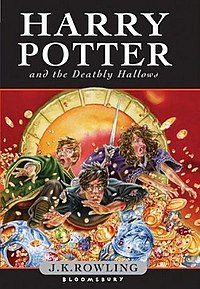 Today, the last of JK Rowling's Harry Potter books, Harry Potter and the Deathly Hallows, went on sale worldwide. When you consider the logistical effort it would take to simultaneously release the book across the world while keeping its contents under wraps, you must give credit to the publishers. But then, they may have had Harry Potter and his magic wand's help, so you'd be forgiven if you thought it was no big deal. But the hype was.
People lined up across the world to be the first, or at least the earliest to buy the book. Many camped outside the bookstore overnight. This is reminiscent of the time when Microsoft's Windows 95 was first released. But really, was it necessary? The wait has already been a long one, what difference would another hour or two make? If you had placed an order with Amazon.com (and there was reportedly more than 2 million orders as of yesterday), you'd have to wait even longer to get your hands on the book.
So I am not so sure that those people who spent their lives in the early queue were making good use of their time. I strolled into Popular Bookstore at about 9am and bought the book. I didn't make a special effort to be early. I usually go out for breakfast at this hour. As it turned out, I was only the second person in the queue and there weren't anybody else in the store except the sales staff. When I left the store, one other person strolled in, probably to buy the HP book.
Perhaps all this craze is evidence of Potter's strong magic? Sadly, there will be magic no more, although the way the story ended suggests a sequel some day... That's being commercially sensible quite apart from having a relatively tearless ending.
Thursday, July 19, 2007
Don't you hear the whistle blowing
So goes a line in that old nursery rhyme, "I've been working on the railroad". Today, whistle blowing refers to something more controversial, and requires a lot more guts from the person doing it. Corporations can be quite messed up today, and its people may not be behaving ethically. So unless there is a system to weed out such improper behaviour, somebody has to do the whistle blowing. This is when the systems and processes, and more especially when the people who are supposed to be the guardian of proper corporate behaviour are not doing their jobs, not to speak of the guard himself stealing the cake.
Apparently, this also happens in the Armed Forces of Singapore. 2Lt Li Hongyi, erstwhile son of PM Lee Hsien Loong, whistle blew on his superior officer for his improper conduct (going AWOL) when his initial complaints got no response from the army's chain of command. He then let fly an e-mail that he had addressed to no less than Mr Teo Chee Hean, the Defence Minister, detailing the failings of his fellow officer. Normally, this whistle blowing would have been the right thing to do. But what 2Lt Li did wrong was to copy that e-mail to persons that may not need to know about the case. After all, this is the Armed Forces, and you don't go shooting off your complaints so the whole world will know that the Forces stink in some parts. As an officer, he should have had better judgement.
E-mail, as some have pointed out, is so insecure an instrument that I wonder why the Armed Forces allowed it as a channel of communications on Army matters right up to the Defence Minister. Today, it was whistle blowing. Tomorrow, some classified information can be leaked, to the benefit of all our enemies and the detriment to our country. Now, some crook or spy can take a leaf from the 2Lt of how to communicate in the Armed Forces, since that channel does not seem to be restricted.
2Lt Li may have done the right thing, but he certainly did it the wrong way. The Army was right in reprimanding him. He should reflect on the error of his ways.
But let us also give credit where it is due. PM Lee did not shield his son in any way. He let the military law to run its course and, in the process, punish his son accordingly. Now, this one action refutes many aspersions cast on the 'Lee' dynasty. We are a country ruled by law, not 'Lee's' law, but Singapore law. As a Singaporean, this is something to be proud of.
Subscribe to:
Posts
(
Atom
)